

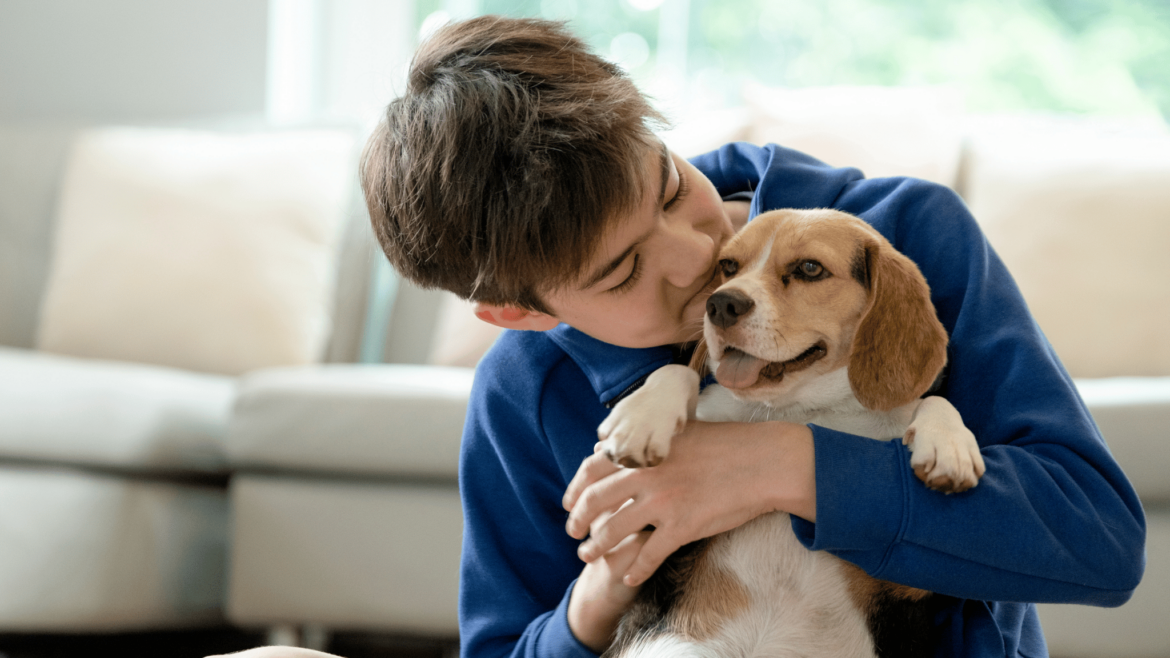
There’s a reason so many kids beg their parents for a puppy, kitten or even a goldfish. Pets have a very special way of capturing kids’ hearts and forming deep, loving bonds. Beyond the cuddles and playtime, which are extremely important, of course, having a pet in the home plays a huge role in a child’s development. Here’s what children learn when they live with a furry, scaly or feathery friend:
Responsibility
First and foremost, caring for a pet gives children a hands-on lesson in responsibility, one that comes with a consistent routine. Filling up their food and water bowls, cleaning up after them, and making sure they get enough exercise and attention have to be a priority every day, whether or not your child feels like it. Understanding that another living being is relying on them for their simple needs to be met helps your child build a healthy sense of responsibility that carries into other areas of life.
Empathy
Pets can’t tell us what they need, so we have to be in tune with them. For children, this means being able to read nonverbal cues, body language and behavior. Learning to recognize when their pet is feeling happy, playful, scared, uncomfortable, in pain, or in need of attention requires children to slow down and pay careful attention. This is empathy in its most fundamental form. That heightened awareness of the needs and feelings of their pet extends into relationships with friends, family members, classmates and other people in their lives.
Emotional Well-Being
For many kids, their pet is one of their most trusted sources of comfort. Pets offer an unconditional, nonjudgmental love, one that often makes it easier for children to decompress, work through big feelings or simply feel less lonely. Science backs this up, too. Interacting with animals has been proven to release oxytocin, serotonin and dopamine, the feel-good hormones, while lowering cortisol, the stress hormone. And this isn’t just the case for petting cats and dogs. Watching fish swim in a tank or listening to a bird chirp and talk can have the same effect. That combination of emotional and physiological responses makes pets a powerful contributor to a child’s overall mental well-being.
Social Skills and Confidence
Having a pet can work wonders for a child’s social development and confidence. First, they give them someone to talk to, which is especially helpful for shy kiddos. Having a pet can also serve as a strong social bridge, giving children a common topic to talk about with other children. Even something as simple as meeting new people while walking a dog can help a child build social skills and confidence. And the empathy children learn from caring for their pet shows up in how they interact with others, as they learn to be gentle, patient and attentive.
Handling Loss and Building Resilience
One of the most tender life lessons a child learns from having a pet is how to cope with loss and work through grief. Pets have much shorter lifespans than our own, and often, the loss of a pet is the first experience with grief a child has. While it’s a tough lesson, it’s also an important one that teaches them about love, life, death and resilience in a meaningful way. These experiences, as difficult as they are, lay the groundwork for how a child understands and processes loss throughout their life.
From the daily responsibilities and social growth to the deeper lessons about empathy and resilience, the benefits that having a pet has on a child’s development are far-reaching. Lake Forrest Prep is a preparatory school in Orlando that’s committed to giving our students plenty of opportunities to learn important life lessons along with academic subjects. Learn about our whole-child curriculum on our website or contact us online to schedule a campus tour.