

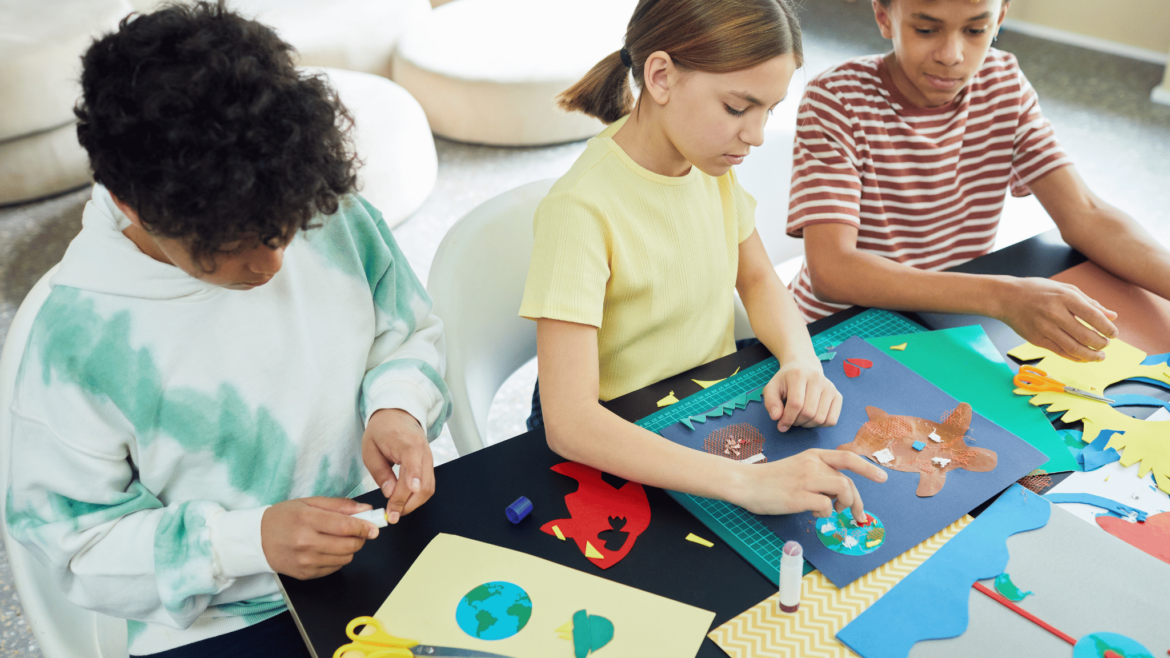
Learning to process emotions is an important part of growing up. For children, who find themselves experiencing all kinds of emotions for the first time, it can be challenging. Putting feelings into words can feel impossible, especially when they’re brand new. This is where creative expression comes into play. Children often find it easier to express themselves through art or music than in conversation. Read on to learn about some of the ways children learn to process their emotions through creative expression.
Taking a Moment to Slow Down
The act of creating has a natural calming effect. For children and adults alike, life can be fast-paced. It often feels like you’re constantly moving from one thing to another, and this can be a huge source of stress. Sitting down and taking a moment to mold some clay, build some blocks or paint a canvas gives children a moment to breathe. During this time, they have space to feel and begin to understand their emotions.
Identifying and Labeling Emotions
Children sometimes have trouble explaining their feelings, and art allows them to show how they feel without using words. They may use darker colors if they’re feeling sad or create sharper textures to express anger. On the other hand, they may use brighter colors and more organic shapes when they’re happy or excited. Take a look at your child’s art with them and ask them what they were feeling when they created it. Chances are, they’ll let you know, and it will be easier than if you asked unprompted.
Building Emotional Intelligence
Art allows children to tap into their emotions, whether or not they realize it at the time. Creating a work of art can be cathartic, or it can help them move through a difficult moment or feeling they’ve been holding on to. Either way, creating helps them better understand who they are and what they feel. As they make these discoveries, lend a listening ear and guide them if they appear to be stuck. Inspiration can come from anywhere, but more often than not, it comes from inside.
Solving Problems and Thinking Critically
While not directly related to emotions, art helps children learn critical thinking and problem-solving skills. Creative expression involves a lot of decision-making, as well as some trial and error. What colors are you going to use? How are you going to put what you’re thinking on the page? What is the best way to approach this challenging note sequence? A lot goes on in someone’s brain when they’re being creative. For children, this translates to skills children can use to cope with emotions, like determining when and how to express certain feelings.
Creative expression gives children an outlet to express and process their emotions, both the positive and negative ones. As they enjoy some peaceful time in front of their canvas, with their notebook or with their instrument in hand, they begin to understand themselves more and more. At Lake Forrest Prep, we encourage children to express themselves creatively through classroom lessons and extracurricular activities. Learn more about us here or contact us here to schedule a tour of our K-8 private school in Orlando.